
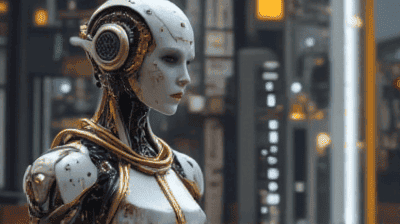
The concept of humanoid robots has fascinated humanity for generations, inspiring countless works of science fiction. From the mechanical servants of the early 20th century literature to the sophisticated androids depicted in modern films, these creations have captured our imagination with their potential to mimic human behavior and appearance. As technology advances, the question arises: how close are we to developing realistic androids that resemble humans not just in form but also in function and behavio

Artificial intelligence has achieved remarkable milestones over the past few decades, particularly in the realm of games. Two of the most challenging games that have been conquered by AI are chess and Go. Through techniques such as reinforcement learning, AI has not only learned to play these games at a high level but has also redefined the boundaries of strategic thinking and decision-making.
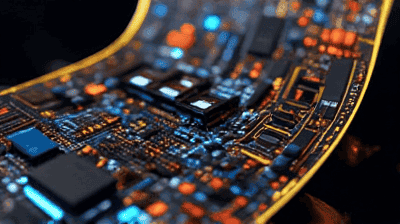
In our fast-paced world, technology is evolving at lightning speed, with innovations reshaping the way we interact with devices. One of the most exciting frontiers in this realm is flexible electronics, a field that promises to revolutionize the design and functionality of consumer gadgets. From bendable smartphones to wearable technology, flexible electronics are set to transform our daily lives in ways we have only begun to imagine.

Artificial intelligence is transforming the technological landscape, powering innovations in diverse fields such as healthcare, finance, transportation, and entertainment. Traditionally, most AI systems have relied on conventional computing architectures, primarily utilizing centralized processing units (CPUs) and graphics processing units (GPUs). However, as the demand for more efficient and powerful AI systems grows, researchers and engineers are exploring alternative computing paradigms. One of the most
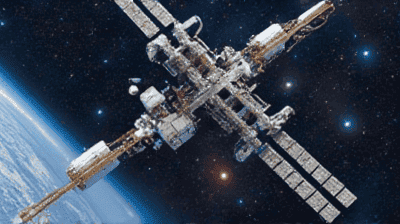
For over two decades, the International Space Station (ISS) has been a pinnacle of human achievement in space exploration. As a laboratory, observatory, and factory, the ISS has allowed researchers to conduct critical scientific experiments in microgravity, paving the way for advances in numerous fields. However, as we look to the future, it becomes clear that the landscape of space habitats is evolving. The rise of private companies, international partnerships, and groundbreaking technologies is set to red